

“Perfect service and communication! Exceeded expectations in every way. Highly recommend!!”
— Client Review

A workers' compensation fraud investigation is a licensed, lawful inquiry into whether a claimed injury, its severity, or its cause has been misrepresented, conducted to produce evidence that is accurate, admissible, and defensible. The aim is never to assume an employee is lying. It is to establish the facts, because most claims are legitimate and the credibility of the whole system depends on separating the genuine from the fraudulent.
The stakes are large. The Coalition Against Insurance Fraud estimates that workers' compensation fraud costs roughly $34 billion each year in the United States, most of it concentrated in claims fraud rather than premium fraud, within a total insurance-fraud problem the Coalition pegs at $308.6 billion annually (Coalition Against Insurance Fraud, 2022). Those costs ripple outward into higher premiums, contested claims, and strained employer-employee trust.
Fraud in this context is narrower than many people assume. A legitimate injury that simply takes a long time to heal is not fraud. The patterns that warrant a closer look generally fall into a few categories.
In Florida, workers' compensation fraud is a specific statutory offense, and the Department of Financial Services maintains a Division of Investigative and Forensic Services dedicated to it. That legal framework is why documentation, not suspicion, is what matters.
In more than 30 years of investigative work, we have learned that a defensible workers' compensation investigation is built methodically, never around a predetermined conclusion. It typically combines several disciplines.
The process usually begins with publicly available records and claim documentation: prior claims history, employment records, and the stated medical limitations. This establishes what the claimant says they cannot do, which becomes the measuring stick for everything that follows.
Where justified, surveillance documents the claimant's actual activity against the stated restrictions. Done correctly, this is lawful, conducted from public vantage points, and meticulously logged. Understanding what professional surveillance actually delivers matters here, because amateur or overly aggressive surveillance can taint a case or expose a client to liability. The value is not a single dramatic clip; it is a consistent, timestamped record.
Public online activity sometimes contradicts a claimed limitation. Investigators document it lawfully and preserve it so it cannot be deleted after the fact.
The deliverable is a clear, factual report with corroborated evidence. Whether the findings confirm fraud or, just as importantly, confirm a claim is legitimate, the value is the same: decisions made on facts rather than guesses.
A common mistake is treating an investigation as a hunt for a single damning moment. In reality, evidence that cannot survive scrutiny is worthless, and evidence gathered improperly can backfire. How investigative findings support a legal defense depends entirely on whether the work was lawful, documented, and consistent. Surveillance must respect privacy boundaries, the chain of custody must be intact, and the report must be objective.
This is also why employers and insurers should resist the temptation to investigate informally. Asking a supervisor to "keep an eye" on a claimant, or pulling private information improperly, can create liability and destroy an otherwise sound case. Professional, licensed investigators work within the rules precisely so the evidence holds.
Documentation discipline is what separates a usable case from a wasted one. In Florida, private investigators are licensed and regulated, and a credible report reflects that standard: it ties each observation to a date, a time, and a location, distinguishes fact from inference, and preserves the underlying material so it can be authenticated later. When an investigation is built this way from the first day, an adjuster, defense attorney, or judge can rely on it without having to relitigate how the evidence was gathered.
Is surveillance of a workers' comp claimant legal? Yes, when conducted properly. Licensed investigators observe and document activity that is visible from public spaces and do not trespass, harass, or invade legally protected privacy. The legality depends on the methods, which is why professional standards matter.
Does investigating a claim mean we think the employee is lying? No. Investigations protect honest claimants too, because confirming a legitimate claim is a valid and common outcome. The goal is accuracy, not a predetermined result.
When should an employer or insurer call an investigator? When there are objective red flags, such as inconsistencies between the reported injury and observed activity, a claim that does not match the incident, or information suggesting outside work. Acting early, before assumptions harden, produces the cleanest evidence.
Can social media really be used as evidence? Public posts can be relevant when they contradict stated limitations, and investigators preserve them properly so they are admissible. Private, protected, or improperly obtained content is a different matter and is avoided.
What makes evidence defensible in a workers' comp dispute? Lawful collection, objective documentation, an intact chain of custody, and a report that states facts rather than opinions. Evidence that meets those standards stands up before adjusters, counsel, and judges.
If you suspect a workers' compensation claim has been misrepresented, what you do next determines whether you end up with usable evidence or a liability. National Business Investigations conducts discreet, lawful, thoroughly documented workers' compensation investigations designed to be admissible and defensible. Contact our team to discuss your situation in confidence.
Michael D. Julian has more than 30 years of experience in private investigations and security. He served as President of the California Association of Licensed Investigators (CALI) from 2005 to 2015 and leads National Business Investigations in delivering investigative work that supports legal strategy and stands up to scrutiny. Connect with Michael on LinkedIn.
Focused investigative support for complex, high-stakes matters.
Witness locates, interviews, evidence recovery, financial records investigations, cyber crimes, and asset search & recovery.
Explore Legal Investigations >>Validate claims, identify red flags, document activity, and support defensible decisions in potential fraud matters.
Explore Insurance Investigations >>Executive background investigations, due diligence, business intelligence, theft, computer forensics, and protection support.
Explore Corporate Services >>Gather the investigative information needed to evaluate legitimacy and disability level with clarity and confidence.
Explore Workers Comp Support >>Pre-litigation, mid-case, or post-judgment—identify where assets may reside to support appropriate strategy and settlement.
Explore Asset Discovery >>Obtain evidence that may not otherwise be provable in or out of court—especially when other methods fall short.
Explore Surveillance >>Having been in business for decades, we know there are many investigation companies you can call on. One does not thrive for over fifty years in this industry without a foundation of honesty, integrity, and professionalism.
We can never promise results—but we always guarantee our performance. If you are not happy with our performance, you only pay what you believe our investigation is worth.
Contact us to get started and find out why clients choose NBI for high-accountability investigative support.

California is a two-party consent state. Learn what California surveillance and recording laws mean for private investigations, evidence, and admissib…
By: Michael D. Julian
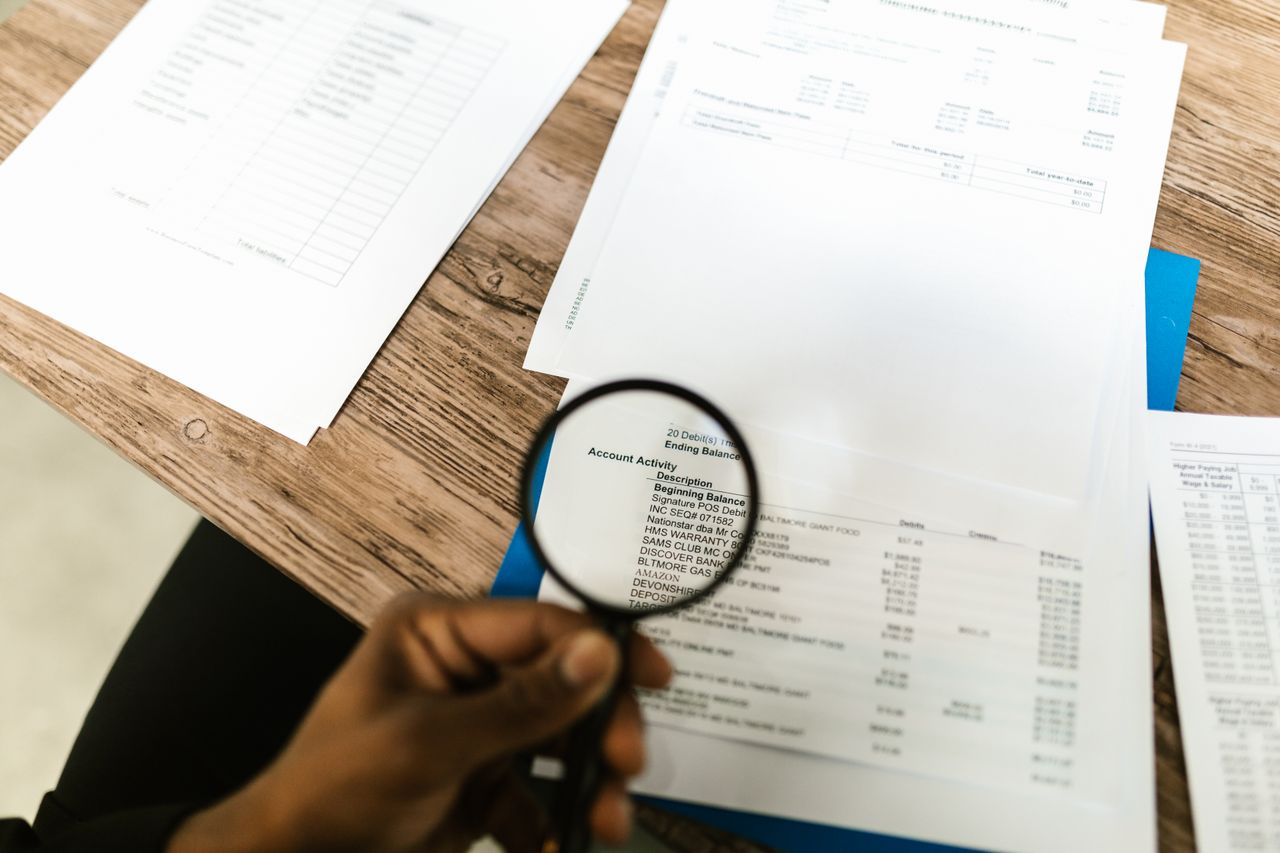
California licenses private investigators through BSIS, and the license number is only the first thing to check. Here is how to verify a firm, what a …
By: Michael D. Julian

California wage-and-hour and PAGA claims are decided on records and witnesses. Here is what a licensed investigator contributes to the defense file, f…
By: Michael D. Julian
A California money judgment is enforceable for ten years, but only if you can find something to collect. Here is how post-judgment asset investigation…
By: Michael D. Julian